
The outcome:
A forward calculation to age 20 and then on to age 57 based on a predicted % increase each year. (Remember the start amount and the % increase each year may vary. Whatever you achieve its going to be better than not doing it in the first place.)
A few hundred growing at 15% or 9% or 15+25%
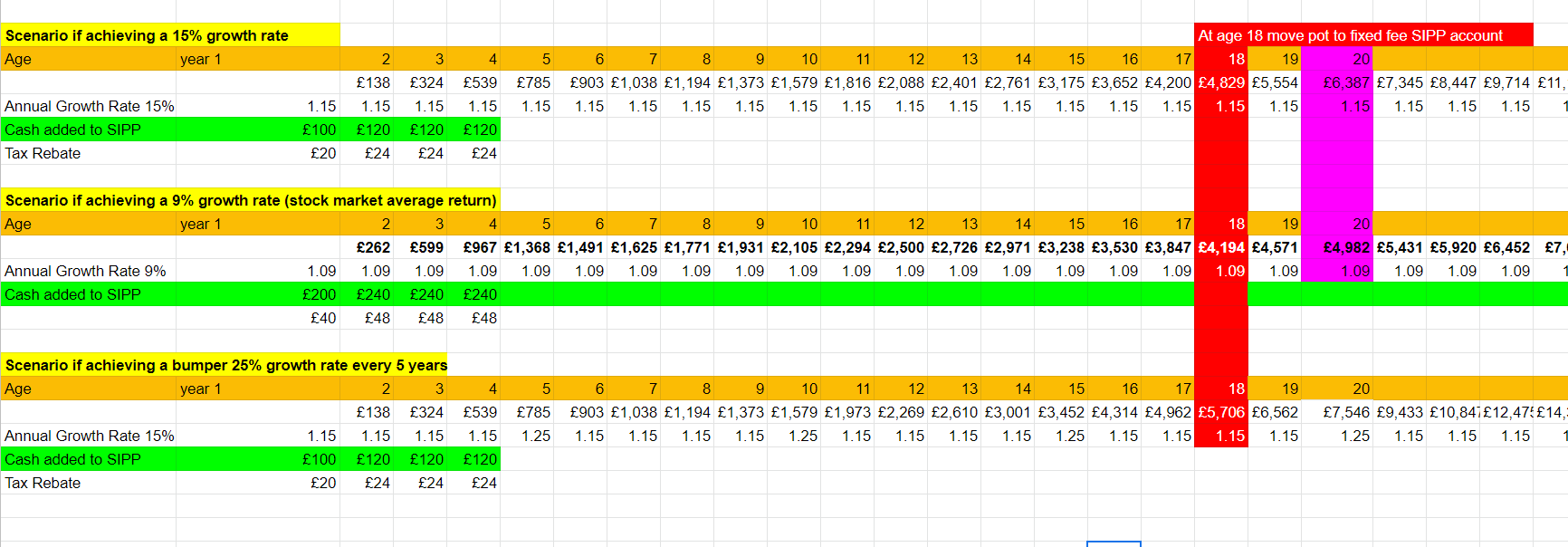
You can use this chart to see how much you need to find if you are playing catch up for a child that’s been around for a few years already. Up to age 20 the difference between average performance and 15% doesn’t seem too big, it might led the unwary to think why go to all the bother? Why not just stick the money in an index fund that tracks the average and run with that? Better have a look at the final figures below…
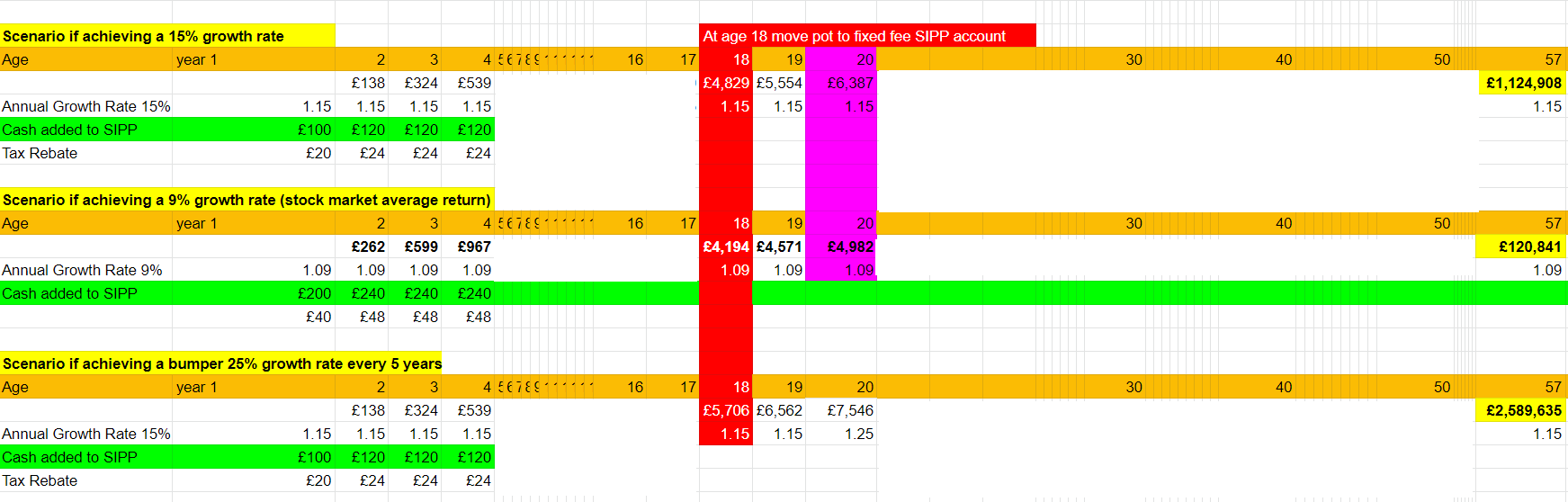
I think you will agree the difference between 9% and 15% a year is pretty staggering! Notice I even gave the 9% a double boost on cash at the start!
I’ve added a line to show what happens if you get a 25% increase every 5 years which is more than feasible in my opinion.
But let’s take a look at what the experts at one of the UK’s largest pension providers are forecasting on their retirement calculator if you start at age 20 with £10,000 and retire at 57:
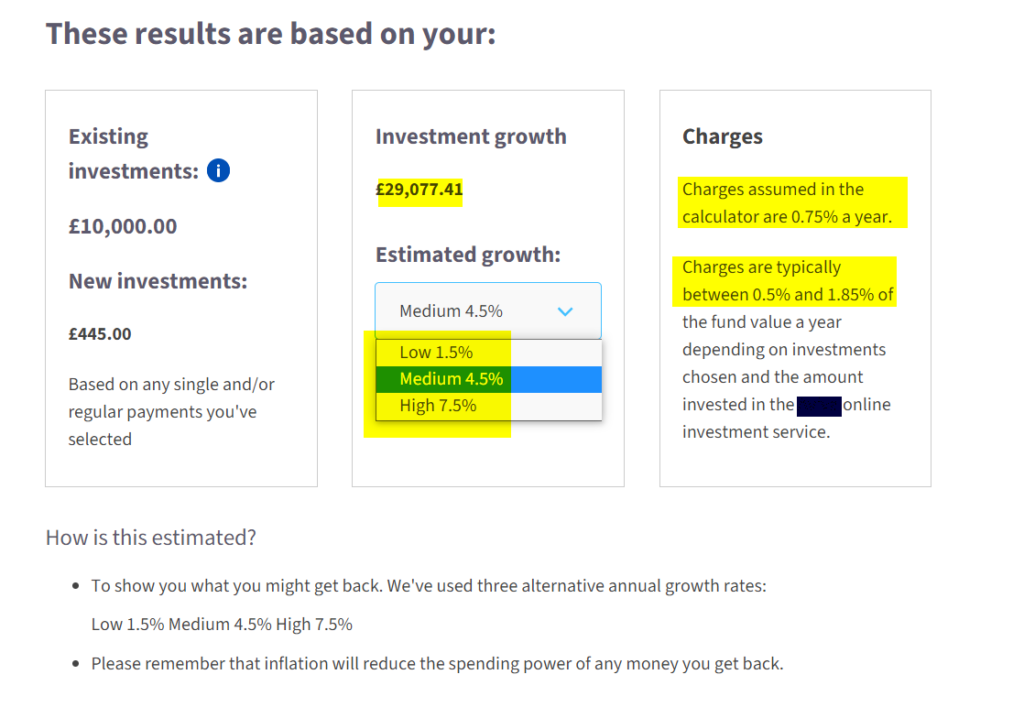
That’s right the finance industry experts are offering you a paltry 4.5% return although they do say it could net as much as 7.5% or indeed as little as 1.5% !!!! Oh and don’t forget they will be helping themselves every single year to a percentage of your entire fund !!! Even though the work required to manage your fund doesn’t change at all and even though their portfolio management is by their own estimation an un-mitigated disaster when compared to the average performance of the entire stock market!!
Yes that’s right if you don’t bother managing your portfolio but instead simply buy a share in the entire stock market which you can do through a specific share type then you get an average return of 8.9% (adjusted for inflation unlike the finance industry’s forecast where they conveniently leave it out of their calculations, no doubt because bringing it in would put their low performance forecast of 1.5% into negative territory !!!)
Why are the experts failing to beat the average?
The answer of course is that they aren’t. They are simply managing our expectations to expect poor results so they can keep the lion’s share of the profits for themselves.
You may not believe that it is perfectly possible to get 15% returns every year but let me tell you it is and let me point out that even if you return half that you will be beating the top forecast of the industry experts because you will not be paying any fees!!!
But isn't it ridiculous to imagine a mere mortal beating the average of the entire market?
Actually no, because the average means it includes all the companies good and bad and you will only choose the good ones and maybe the odd one that turns bad after being good so your average return will of course be higher.